DJI Enterprise AERONEX VMS Integration

Public Safety / Emergency Response

FlightHub 2 Integration Workflow with VMS System

A customer-safe architecture deck for routing DFR aerial video into a neutral VMS Platform or Command Center, while keeping FlightHub 2 as the operational layer.
On-Premises / AIO first RTSP / RTMP / WebRTC Human-in-the-loop Evidence extension
Official DFR visual context: dock-based response brings aerial visibility into command-center workflows.

Operational Goal

Give the command center live aerial visibility before ground units arrive.

In a DFR workflow, the VMS is not the flight control system. It is the video distribution, monitoring, and evidence review layer for dispatchers, supervisors, and investigators.
<100sDFR response benchmark shown by DJI for a defined 1 km scenario, subject to conditions.
24/7Dock-based readiness for scheduled patrols, alarms, and emergency response workflows.
3Primary live-video choices: RTSP, RTMP, and WebRTC depending on endpoint and latency needs.
HITLOperator confirmation remains the decision point before dispatch or intervention.
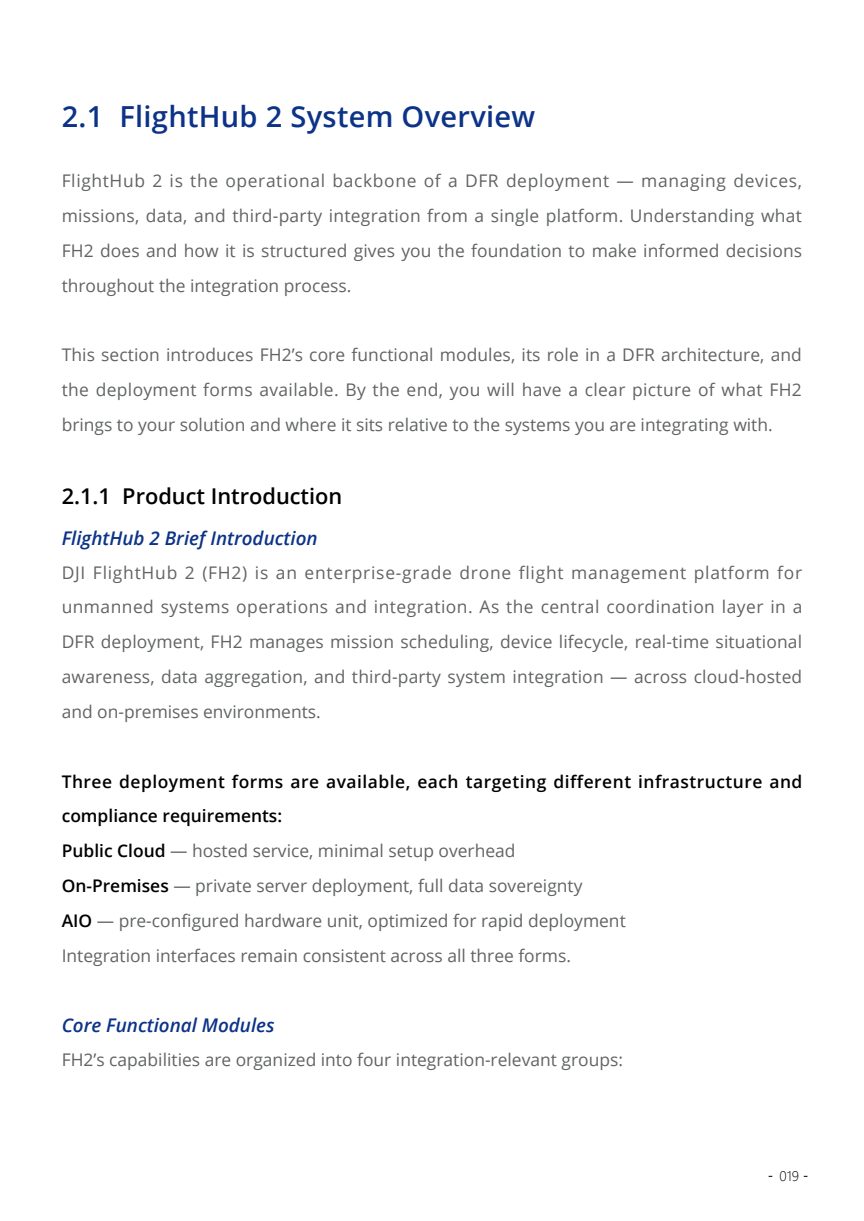
FlightHub 2 DFR overview from whitepaper
Whitepaper reference: FlightHub 2 is positioned as the operational and integration layer for DFR workflows.

Source basis: DJI Enterprise Dock as First Responder page and the supplied DFR whitepaper.

System Topology

Dock / Drone -> FlightHub 2 -> VMS Platform -> Command Center

Capture

Dock 3 / Drone

Live camera feed, mission snapshots, aircraft position, and mission status are generated at the edge.

Operations

FlightHub 2

Remote operations, Virtual Cockpit, workflow dispatch, live stream management, and media synchronization.

Video Layer

VMS Platform

Receives selected video streams through standard video protocols for monitoring, layout, recording, and review.

Users

Command Center

Dispatchers and supervisors view live aerial context without taking over aircraft control authority.

Protocol Selection

Use the right video path for the customer environment.

FlightHub 2 can support different live-video delivery patterns. For VMS integration, RTSP is usually the most familiar path for security platforms; RTMP is useful for event-linked distribution; WebRTC is more suitable for browser-based low-latency viewing.

RTSP

Best fit for VMS, NVR, traditional IP-camera workflows, and command-center video walls.

RTMP

Useful for event-triggered broadcast, security operations, and media relay workflows.

WebRTC

Low-latency browser view for command web portals and cloud-style collaboration scenarios.
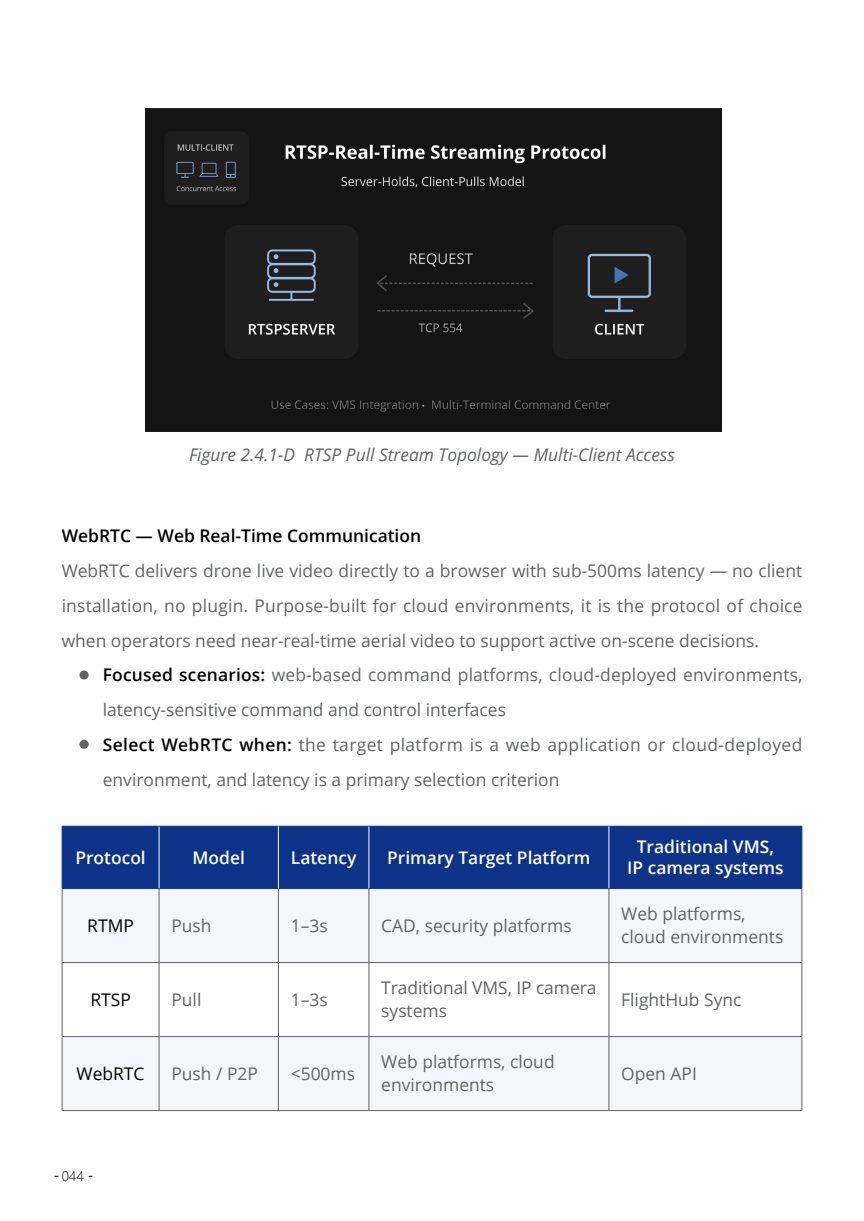
DFR live-streaming protocol reference
Whitepaper reference page: live-streaming paths for CAD, VMS, browser, and command-center consumption.
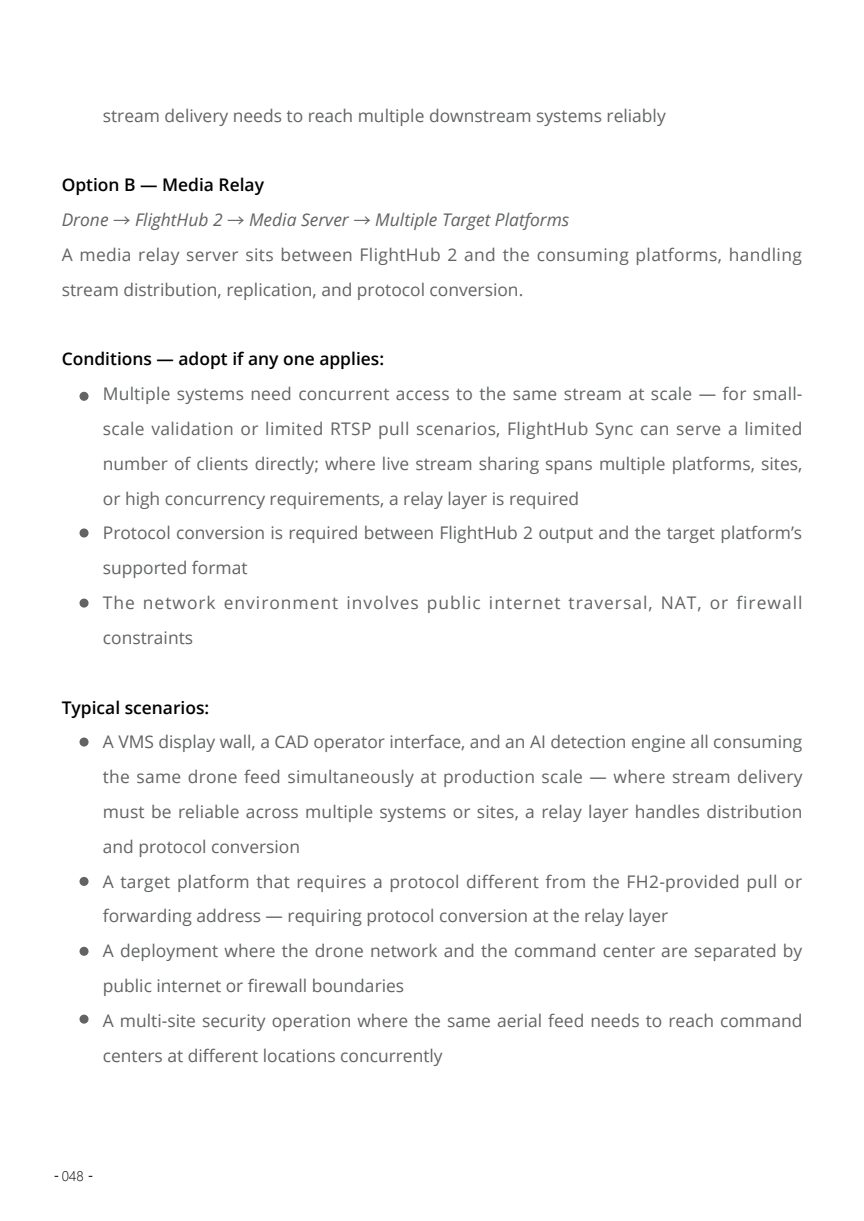
Direct streaming and media relay reference
For VMS projects, the architecture decision is often direct stream versus media relay.

Architecture Choice

Direct stream for small and controlled integrations.

Use direct streaming when there are only a few consumers, a stable network path, and the VMS can consume FlightHub 2's selected stream format directly.

Low concurrency

Suitable when only one VMS or one command-center endpoint needs the live feed.

Simple trust boundary

Works best when both systems sit within a known network and customer IT can allow the required path.

Fast validation

Good first step for proof-of-concept testing before designing relay or recording expansion.

Scalable Deployment

Media relay is the clean handoff for larger command-center environments.

When video needs to reach multiple VMS clients, wall displays, archive services, or partner systems, a relay layer can normalize protocols, protect the FlightHub 2 boundary, and simplify customer-side distribution.

Source

FlightHub 2

Produces authorized live stream for each mission, dock, or drone channel.

Relay

Media Gateway

Optional customer-controlled component for protocol conversion, scaling, and network isolation.

Consume

VMS Platform

Pulls or receives normalized video channels in a format the VMS already supports.

Operate

Command Center

Views, records, and reviews video as part of existing security operations.

Operator Workflow

Keep flight decisions in FlightHub 2, and video decisions in the VMS.

01 Alarm

Incident received

Alarm, dispatch, or patrol trigger creates the need for aerial situational awareness.

02 Confirm

Operator approves

FlightHub 2 prepares the response and the operator confirms dispatch or route execution.

03 Fly

Dock response

The drone launches from the selected dock and streams live video from the scene.

04 View

VMS consumes

The VMS displays the aerial stream beside fixed cameras and incident layouts.

05 Review

Evidence retained

Recording, snapshots, mission media, and logs support debrief, reporting, and investigation.

Evidence & Recording Extension

Recording is an extension of DFR, not a replacement for the VMS.

The VMS deck should position evidence handling as an optional extension: long-term recording, event replay, mission media synchronization, and investigation handover. The flight workflow remains controlled by FlightHub 2.

Live recording

Capture mission video when the VMS or archive policy requires replay.

Mission media

Synchronize photos, video clips, panorama files, and annotations to customer storage.

Retention policy

Define storage duration by incident type, compliance need, and customer IT policy.

Case handover

Export replay-ready evidence packages for investigation, training, or public-safety reporting.
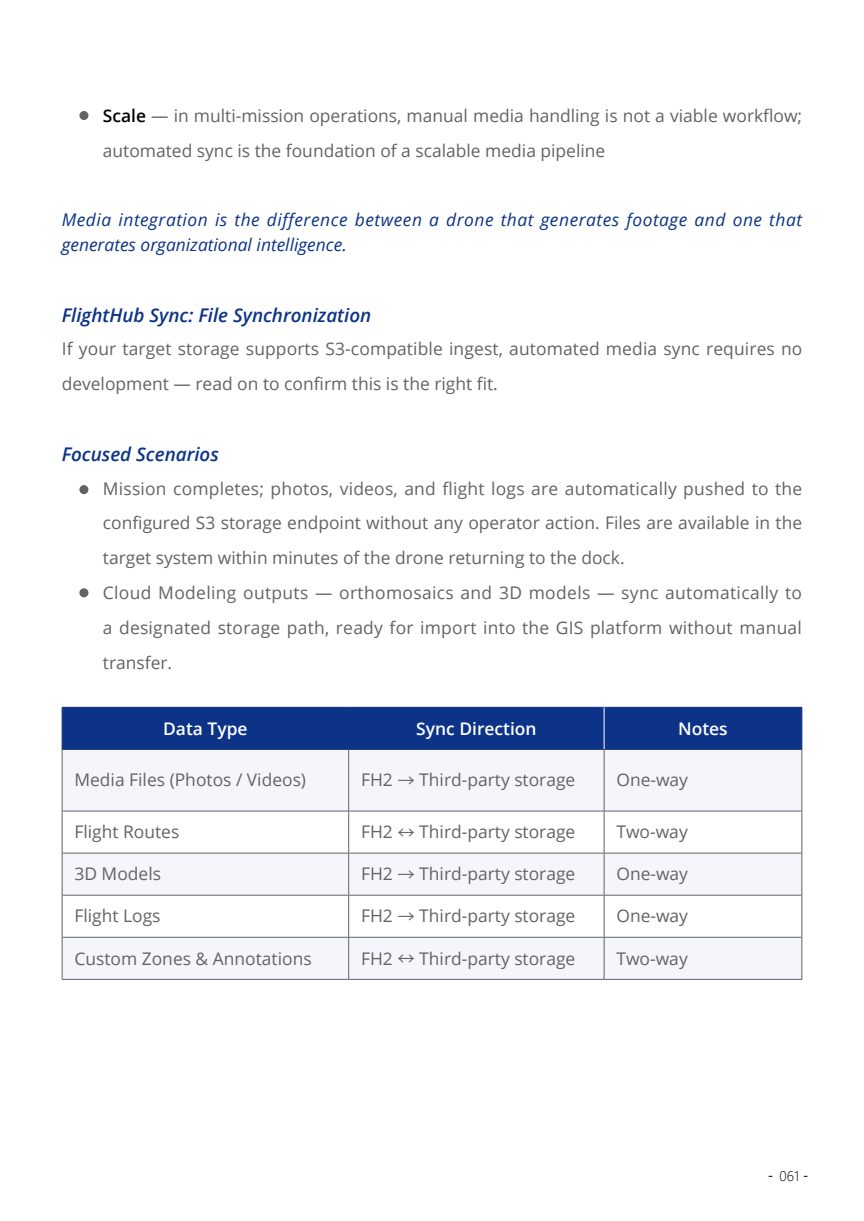
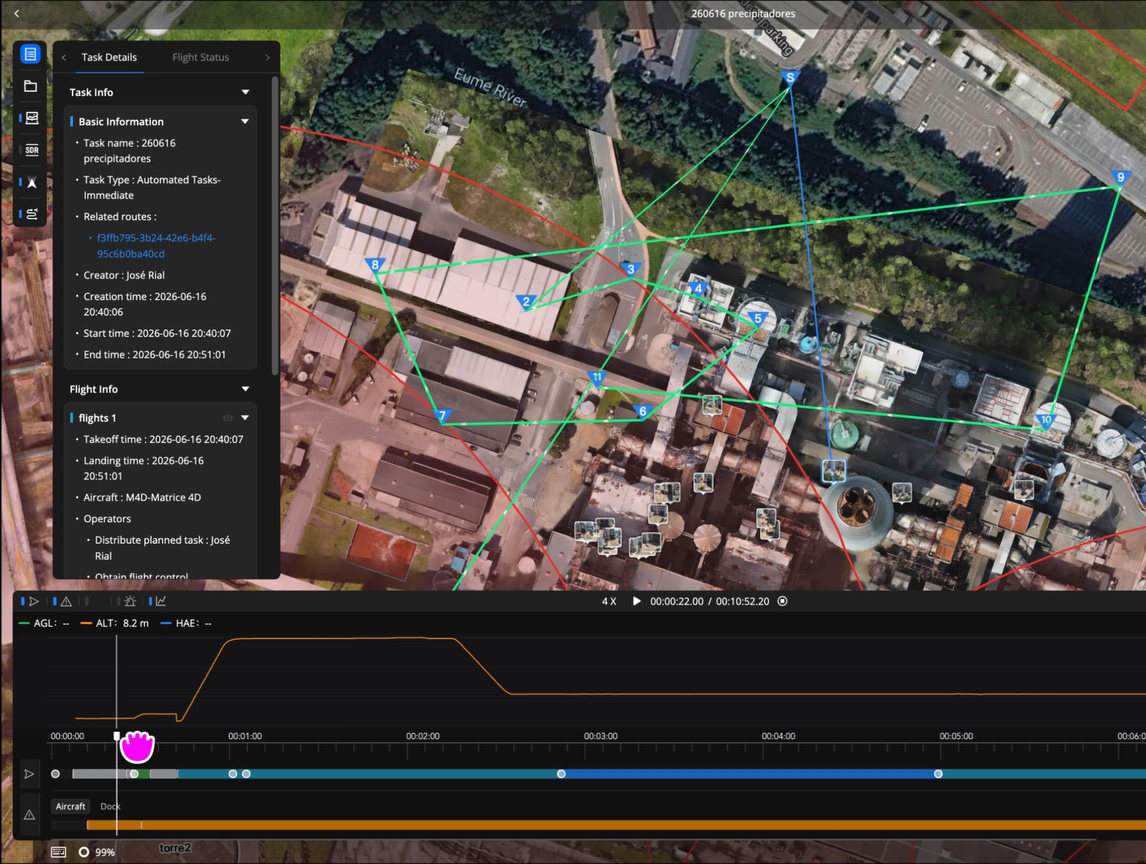
Mission media and evidence workflow reference
Mission media and file synchronization can extend live operations into evidence and review workflows.
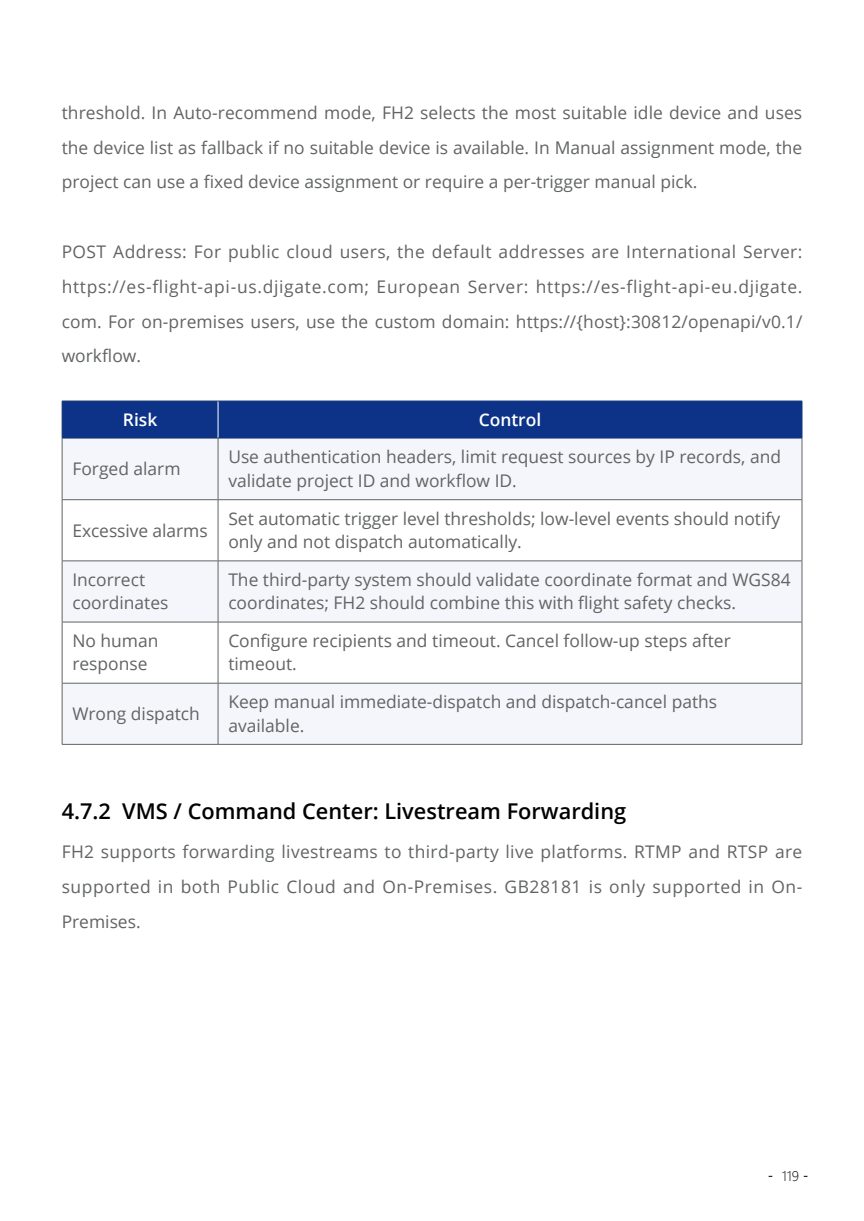
Third-party integration security reference
Integration security should be discussed at the architecture and responsibility level, without exposing endpoint or header details.

Security Boundary

Show enough architecture for IT review, without exposing sensitive implementation details.

Network boundary

Define where FlightHub 2, VMS, relay, and storage sit in the customer network.

Access control

Separate flight-control authority from VMS viewing and evidence-review permissions.

Auditability

Align stream access, operator action, and media export with customer audit expectations.

Customer-facing deck excludes sensitive endpoints, headers, keys, internal service names, and private network values.

Pre-Sales Checklist

What to confirm before a VMS integration workshop.

Deployment model

Confirm On-Premises or AIO as the main deployment target, with Public Cloud only for validation if needed.

VMS capability

Confirm RTSP, RTMP, WebRTC, GB/T-style local requirements, decoding limits, and authentication expectations.

Concurrency

Confirm how many live viewers, video-wall clients, and recording services need each stream.

Evidence policy

Confirm retention duration, export format, storage owner, and who can review or share recordings.

Human decision point

Confirm who approves dispatch, manual takeover, stream sharing, and evidence export.

IT review pack

Prepare data-flow diagram, architecture diagram, data classification, integration description, and security responsibilities.

FlightHub 2 DFR VMS Integration